visit the brewery
gallery
.png)
.png)


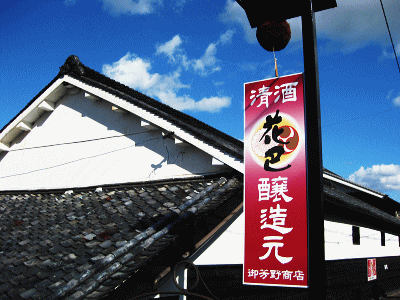
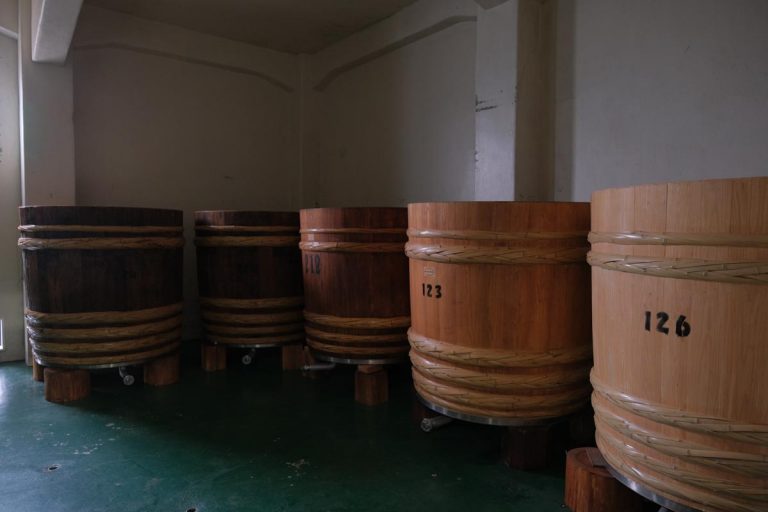
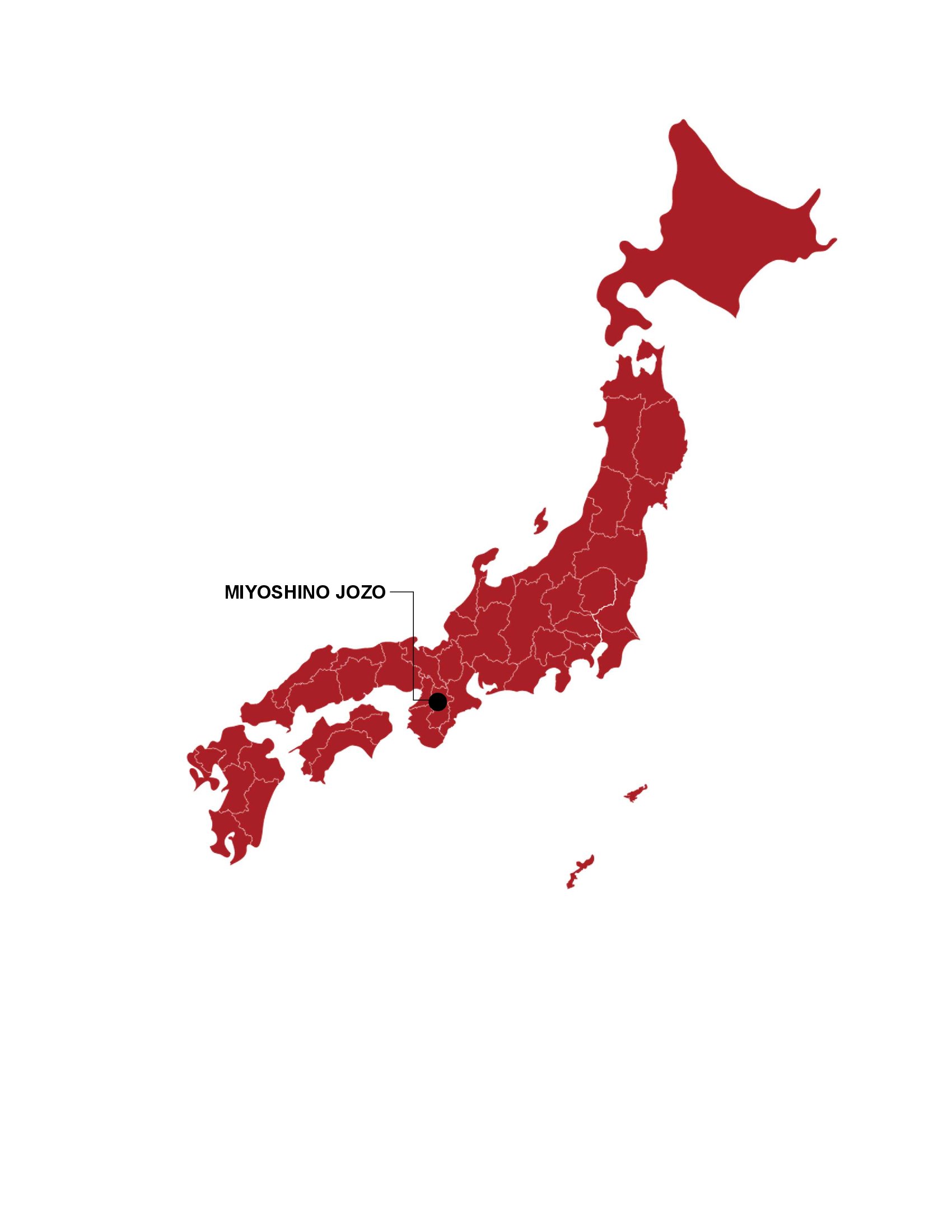
Miyoshino is located on the Kii Peninsula in Nara prefecture. This area is particularly humid, making it difficult to make lighter and delicate styles of sake. As these lighter, delicate styles of sake are popular, brewers try to control many of the brewing steps to make this style sake. The toji at Miyoshino has chosen a different path. He embraces this environment. Many of his sake products use only natural, ambient yeasts and lactic bacteria, which are abundant in humid environments. Seeing this challenging terroir as an advantage, instead of a disadvantage, allows the toji to make incredibly unique and complex sake.
To make his unique style of sake at Miyoshino, the toji, Teruaki Hashimoto, believes that one can’t simply organize rice by rice varietal. To brew without understanding the source of the rice, one can lose the nuances in flavor. He explains that rice grown at the foot of the mountains is very different from the plains. Mountain rice utilizes cold, run-off water from the mountain and receives less sunlight. In contrast, rice grown in the plains has more sunlight, and water comes from ponds and rivers. The differences in these conditions result in different characteristics in the rice, which is why you can’t simply group rice by strain. Miyoshino has farm-direct contracts with each farmer to understand the rice and how it is grown, so the toji can apply the best brewing techniques to each type of rice. This application of techniques goes for the rice polishing, where the toji chooses polishing rate by rice field, not by variety, to finding the right moto technique to bring out the best expressions of the rice.
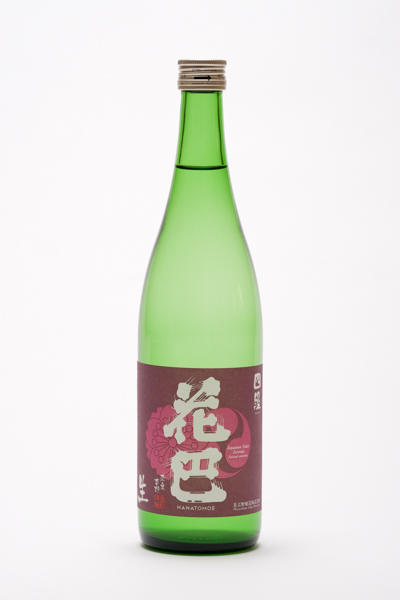
Many of the unique characteristics in Hanatomoe sake, including the rich umami flavors and high acidity come from their use of natural, ambient yeasts and lactic bacteria in the the brewery. For their kimoto and yamahai products, which make up most of their sake assortment, Miyoshino does not use any cultivated yeasts in these products. The toji believes that the use of natural yeasts and lactic bacteria are the purest way to understand how different moto methods impart flavor to sake. The use of natural yeasts and bacteria is just a further extension of the “terrior” concept that uses local rice and the natural environment in a harmonious way to produce a sake the represents the essence of the Kii Peninsula.


.png)






.png)







.svg)


.png)